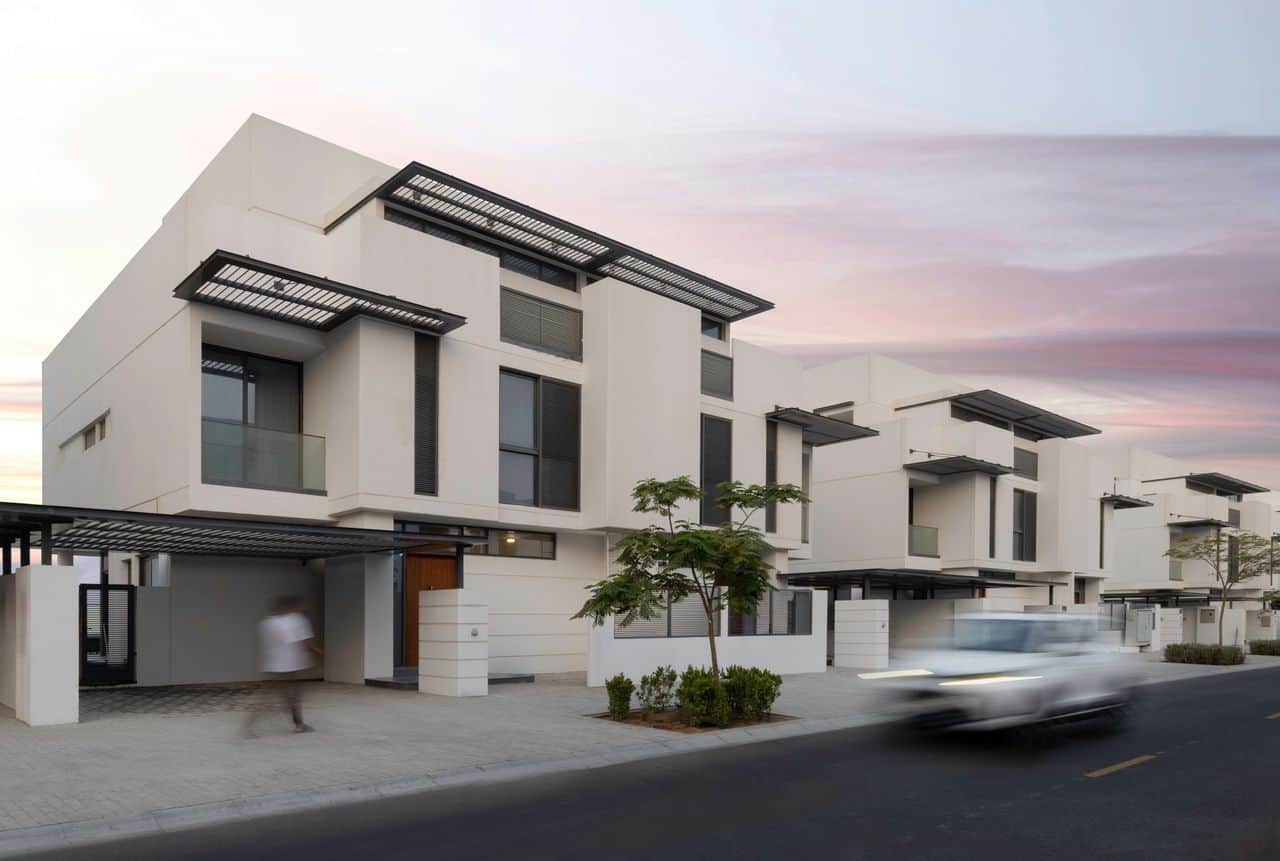

A damaged home can create immediate financial pressure for a family, particularly where the loss affects not only the property itself but also essential furniture, appliances and household fittings.
New UAE rules now provide a clearer framework for certain eligible families to receive financial support where their homes are materially damaged by a qualifying crisis or disaster.
Under Cabinet Resolution No. 135 of 2026, which came into effect on 15 August 2026, qualifying UAE nationals already receiving specified social support may apply for assistance of up to AED 350,000.
The Resolution replaces the UAE’s previous disaster-relief framework dating back to 2008 and introduces updated eligibility requirements, compensation limits, exclusions and application procedures.
However, the scheme is not a universal compensation programme for every homeowner or resident in the UAE.
Eligibility is specific, the loss must be officially assessed, and applicants must comply with strict procedural requirements.
Who Is Eligible?
The support is available to qualifying UAE nationals who are permanent residents and who receive federal social support or assistance through relevant local government programmes.
The damaged residence must also be located within the UAE.
This means the scheme should not be understood as general disaster compensation available to:
- all UAE residents;
- every property owner;
- tourists;
- landlords generally; or
- businesses whose commercial premises are damaged.
The Resolution operates within the UAE’s social-support framework and is intended to assist eligible households already falling within the relevant support system.
Applicants must also obtain an official report confirming the damage from the competent emergency, civil defence or government authority.
That official assessment is likely to be central to determining whether the event qualifies and how much support may ultimately be awarded.
What Counts as a Crisis or Disaster?
One of the more unusual elements of the Resolution is its specific definition of a qualifying crisis or disaster for the purposes of this assistance.
The framework applies where external factors cause material damage to five homes or fewer.
That should not be taken as a general legal definition of a disaster across UAE legislation.
Rather, it is the threshold adopted specifically for this social-support mechanism.
The rule appears designed to address smaller-scale incidents affecting individual households or a limited number of homes, rather than only large national emergencies.
Depending on the circumstances, qualifying incidents could potentially include events such as fires, severe weather or other external occurrences that cause material residential damage.
The actual application will depend on the circumstances and the official assessment.
What Damage Can Be Covered?
The scheme can cover verified damage to the residence itself as well as essential household contents.
This includes items such as:
- furniture;
- domestic electrical appliances;
- essential interior finishes;
- essential exterior finishes; and
- necessary household fittings.
The emphasis is on restoring essential residential use rather than compensating every item of property belonging to the family.
The amount awarded will depend on the verified loss and the applicable assessment framework.
The AED 350,000 Figure Is a Maximum, Not an Automatic Payment
The headline amount is important, but it should be understood correctly.
Eligible applicants can receive up to AED 350,000.
That does not mean every approved household will receive AED 350,000.
The actual amount depends on the assessed value of the qualifying damage.
The Resolution therefore establishes a ceiling rather than a fixed payment.
A household suffering relatively limited damage would not ordinarily receive the same amount as one facing extensive verified residential loss.
The assessment process is therefore central to the scheme.
What Is Excluded?
The new framework also clearly limits the categories of loss that can be compensated.
Excluded property includes:
- vehicles;
- cash;
- commercial or professional assets;
- boats;
- jewellery;
- antiques;
- animals;
- crops; and
- swimming pools.
This reflects the social purpose of the scheme.
The objective is to help restore essential housing and household needs, not to provide comprehensive compensation for every financial loss associated with a crisis.
Businesses should therefore not assume that damaged stock, equipment or other commercial property falls within the scheme simply because it was located at or connected to the affected residence.
Damage Caused by Negligence or Intentional Conduct Is Not Covered
Eligibility also depends on how the damage occurred.
The Resolution excludes losses caused by circumstances such as:
- negligence;
- trespass;
- default; or
- intentional acts.
This is an important limitation.
The scheme is designed to respond to external crisis or disaster events rather than compensate losses resulting from the applicant’s own wrongful or avoidable conduct.
Where the cause of the incident is disputed, the official report and supporting evidence may therefore become particularly important.
No Double Recovery for the Same Loss
Applicants cannot receive duplicate emergency assistance from another UAE government entity for the same loss.
This prevents multiple government compensation payments being made for the same damage.
That does not necessarily mean the existence of every other form of financial support automatically defeats an application.
The important distinction is whether another UAE entity has already provided emergency compensation for the same qualifying loss.
Applicants should therefore disclose relevant payments accurately.
Failure to do so could jeopardise the application and potentially lead to recovery of amounts paid incorrectly.
The Application Deadline Is Short
One of the most important practical requirements is the deadline.
Eligible families generally have 30 days from the date of the crisis or disaster to submit their application.
That is not a particularly long period where a family may simultaneously be dealing with:
- emergency accommodation;
- damaged possessions;
- insurers;
- repair contractors;
- civil defence;
- police reports; and
- other immediate consequences of the incident.
Families who may qualify should therefore avoid waiting until repair work has been completed before considering the application.
Evidence should be collected as soon as possible.
What Documents Are Likely to Matter?
The Resolution requires supporting documentation, including an official damage report.
In practice, applicants should preserve as much reliable evidence as possible.
This may include:
- official incident reports;
- civil defence documentation;
- photographs and videos of the damage;
- proof of residence;
- identification documents;
- evidence of social-support eligibility;
- repair estimates;
- invoices;
- receipts;
- proof of ownership of damaged essential items; and
- details of any other compensation received.
The stronger the documentary record, the easier it should be for the relevant authority to assess the loss accurately.
Families should also avoid disposing of damaged property prematurely where it may still be needed for inspection or verification.
How Quickly Must the Application Be Decided?
Once a complete application has been submitted, the Ministry of Community Empowerment must determine it within seven working days.
That creates a relatively fast decision-making timetable, reflecting the emergency nature of the assistance.
Importantly, where no decision is issued within the prescribed period, the application is treated as rejected.
Applicants should therefore monitor the status of the application closely rather than assuming that silence means approval.
Where an application is rejected, the applicant should promptly assess whether any review or grievance mechanism is available under the wider social-support framework and ensure that any further procedural deadlines are observed.
How Does This Differ From Insurance?
Government crisis assistance and private insurance serve different purposes.
Homeowners or tenants may have insurance covering certain forms of property damage, contents or temporary accommodation.
The government scheme is instead a social-support mechanism available only to qualifying households.
Families should therefore not assume that eligibility for one automatically determines entitlement under the other.
Insurance policies may also contain their own:
- coverage limits;
- excesses;
- exclusions;
- notification requirements; and
- claims procedures.
Where insurance and government assistance potentially overlap, careful disclosure is important to avoid double compensation for the same loss.
What Families Should Do Immediately After a Qualifying Event
Where serious residential damage occurs, several practical steps can help preserve an eligible family’s position.
First, the incident should be reported to the appropriate authority as quickly as possible.
Second, the family should obtain the official damage documentation required by the Resolution.
Third, evidence of the damage should be preserved through photographs, videos and records.
Fourth, the family should identify whether it already receives the form of federal or local social support required for eligibility.
Fifth, any insurance claim should be handled separately and accurately documented.
Most importantly, the 30-day application deadline should be recorded immediately.
In emergency situations, procedural deadlines are easy to overlook.
Why the New Framework Matters
Cabinet Resolution No. 135 of 2026 represents a significant update to a disaster-relief system that had operated under an earlier framework for many years.
The revised rules provide greater clarity around:
- who may qualify;
- what types of loss are covered;
- what is excluded;
- how compensation is assessed;
- the maximum available support; and
- how quickly an application must be made and decided.
That clarity matters because financial relief following a sudden home emergency is most useful when families understand quickly whether they qualify and what they need to do.
The Resolution also reflects the wider purpose of UAE social-support policy: targeted assistance directed towards households that meet defined eligibility criteria rather than universal compensation for all losses.
Conclusion
The UAE’s new crisis and disaster relief framework can provide substantial assistance to eligible families whose homes suffer qualifying material damage.
Under Cabinet Resolution No. 135 of 2026, qualifying UAE nationals receiving relevant social support may receive up to AED 350,000 towards verified damage to their homes and essential household contents.
The amount is not automatic, and the scheme does not cover every category of property or every affected resident.
Eligibility depends on the applicant’s status, the nature and cause of the damage, official verification and compliance with the application requirements.
The most important practical point is timing.
Families who may qualify should document the damage immediately and act within the 30-day application period rather than waiting until the consequences of the incident have been fully resolved.
Al Kabban & Associates
For businesses seeking guidance, Al Kabban & Associates, with over 30 years of experience in UAE law and recognition by Legal 500, stands ready to help corporations build resilience against legal risks while ensuring compliance with local and international standards. For more information or to schedule a consultation, contact us at +971 4 453 9090 or visit www.alkabban.com. You can also follow us on social media for more updates on everything law related in the UAE: @Alkabban_Law
ALSO READ –
Can UAE Companies Fire Employees on Maternity Leave? What the Law Says
Playing Music in a UAE Business Is About to Become a Licensing Issue: What Venues Need to Know