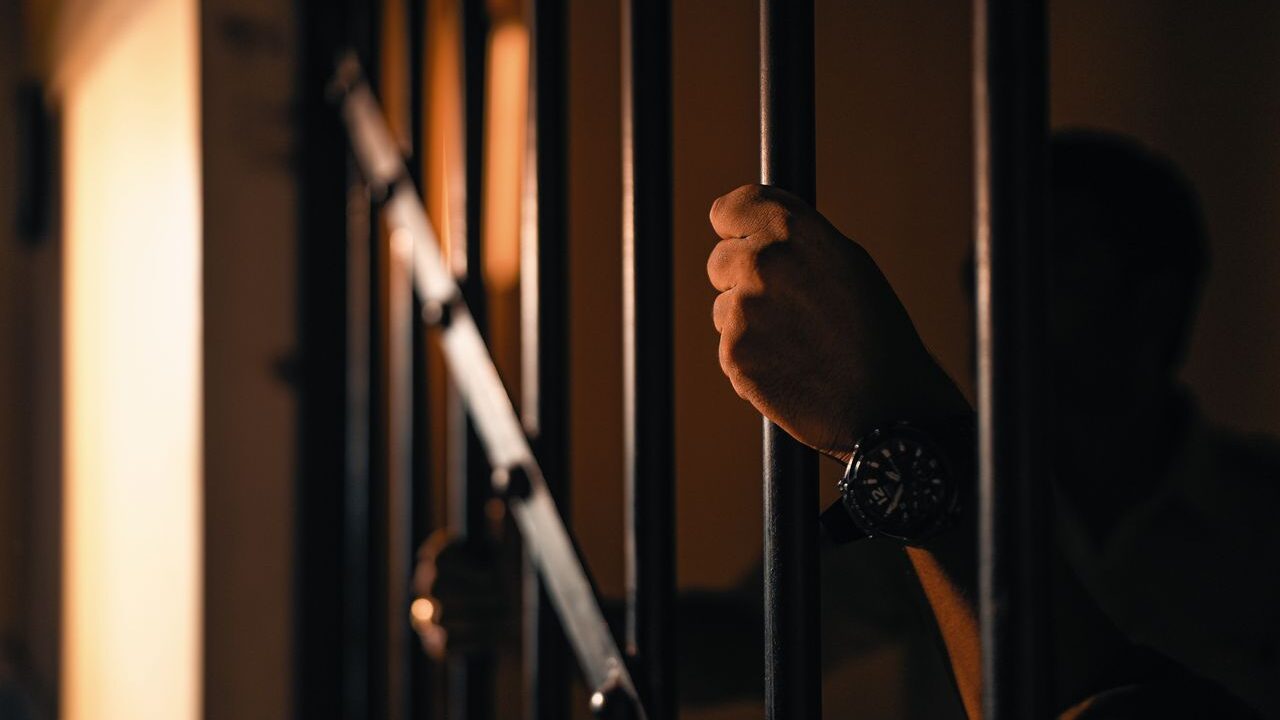

Sharjah has introduced a new legal framework for its correctional institution that places rehabilitation and the protection of inmate rights alongside security and public protection.
The new law, issued by His Highness Sheikh Dr Sultan bin Mohammed Al Qasimi, Supreme Council Member and Ruler of Sharjah, regulates the Correctional Institution in the Emirate and establishes the principles governing how custodial sentences and detention are administered.
Its objectives are significant.
The law expressly refers to achieving security, reform and rehabilitation, safeguarding the dignity and rights of inmates, and providing social, psychological and cultural rehabilitation for people serving custodial sentences.
The approach reflects an important principle of modern criminal justice:
The purpose of imprisonment is not limited to confinement. A correctional system can also seek to reduce future offending, support rehabilitation and protect society through successful reintegration.
What Does the New Law Establish?
The law establishes a local institution concerned with correction and rehabilitation, known as the Correctional Institution, which is administratively and financially affiliated with Sharjah Police.
Its principal headquarters will be in Sharjah City.
Branches or other locations may also be established elsewhere in the Emirate by decision of the Commander-in-Chief, subject to approval by the Sharjah Executive Council.
The Institution is divided into three principal components:
- a Correctional Institution for Men;
- a Correctional Institution for Women; and
- a Juvenile Centre for persons sentenced to imprisonment or placement.
The law also requires appropriate separation between male and female juveniles.
Importantly, the framework is not confined only to people already serving criminal sentences.
Its provisions also extend to designated places used for the execution of pre-trial detention orders where those facilities fall outside the geographical jurisdiction of the Institution’s administration.
Security and Rehabilitation Are Treated Together
One of the most notable features of the law is the way it frames the objectives of correctional policy.
Security remains central.
Correctional institutions must protect society, maintain order and ensure that custodial sentences and detention measures are properly executed.
But the law does not treat security and rehabilitation as competing objectives.
Instead, it expressly connects them.
The Institution’s general policy is intended to achieve:
- security;
- reform; and
- rehabilitation.
That reflects the principle that long-term public protection is not necessarily achieved by confinement alone.
Where an offender will eventually return to society, reducing the likelihood of reoffending can itself become part of protecting the public.
The Principle of Social Defence
The law also refers to the concept of social defence.
In practical terms, this means the execution of criminal sentences should contribute to the protection of society rather than operate purely as punishment detached from any wider social purpose.
That is an important distinction.
A custodial sentence may serve several functions at the same time, including:
- punishment;
- deterrence;
- protection of the public;
- accountability;
- rehabilitation; and
- preparation for eventual reintegration.
The new Sharjah framework expressly places correction and rehabilitation within that broader understanding of public protection.
Inmate Dignity Is Expressly Protected
The law requires the Institution to provide a safe environment that safeguards inmate dignity and protects inmate rights.
That language is important because imprisonment necessarily restricts liberty, but it does not remove every other legal right or aspect of human dignity.
People in custody remain entitled to treatment consistent with the applicable legal framework.
The law therefore regulates matters extending beyond physical detention, including:
- inmate rights;
- healthcare;
- social care;
- education;
- awareness programmes;
- visitation;
- inspection;
- disciplinary procedures; and
- release.
This demonstrates that correctional administration involves significantly more than preventing inmates from leaving a facility.
It also involves managing the conditions in which detention takes place.
Healthcare Forms Part of the Correctional Framework
Healthcare is expressly included within the matters regulated by the new law.
That is particularly significant because correctional institutions have direct responsibility for people who cannot independently access healthcare in the ordinary way.
Custody can involve individuals with:
- chronic health conditions;
- mental health needs;
- medication requirements;
- injuries;
- disabilities; or
- other medical needs.
A proper correctional framework must therefore address both security and continuity of medical care.
The inclusion of healthcare within the law reinforces the principle that incarceration does not eliminate the responsibility to protect an inmate’s basic welfare.
Social and Psychological Rehabilitation
The law goes further by expressly referring to the social and psychological rehabilitation of convicted persons.
This is one of the most important aspects of the new framework.
Criminal behaviour can arise from a complex combination of factors.
These may include:
- substance dependency;
- family breakdown;
- social isolation;
- behavioural difficulties;
- psychological conditions;
- limited education;
- unemployment; or
- repeated exposure to criminal environments.
Not every factor applies to every offender.
But a correctional model focused exclusively on punishment may leave many of the underlying causes of offending untouched.
Rehabilitation programmes can instead seek to improve the prospects that an individual returns to society in a more stable position.
Education and Awareness Are Also Part of Rehabilitation
The law expressly includes education and awareness among the areas governed by the Institution.
Education can play an important role in reducing barriers to reintegration.
An inmate who develops:
- literacy;
- practical knowledge;
- vocational skills;
- greater legal awareness; or
- improved social skills
may be better placed to rebuild life after release.
Awareness programmes can also address behaviour, responsibility and the consequences of offending.
These measures should not be viewed as benefits that undermine punishment.
They can form part of the correctional process itself.
A custodial sentence can remain punitive while also creating an opportunity for reform.
The Framework Extends to Juveniles
The establishment of a dedicated Juvenile Centre is another important element.
Children and young people in conflict with the law require a different approach from adult offenders.
Their age, maturity and developmental circumstances can make rehabilitation particularly important.
The law provides for juveniles sentenced to imprisonment or placement to be accommodated within a specialised centre, with appropriate separation between males and females.
This supports a correctional approach that recognises the distinct needs of younger offenders rather than simply placing them within the ordinary adult prison environment.
Pre-Trial Detainees Require a Different Legal Approach
The law’s application to certain places of pre-trial detention is also significant.
A person held in pre-trial detention has not necessarily been convicted of the offence under investigation or prosecution.
That distinction must remain fundamental.
Pre-trial detention may be imposed for legitimate procedural or security reasons, but it is not itself a criminal sentence.
Correctional administration should therefore distinguish between:
- convicted persons serving sentences; and
- persons detained pending investigation or trial.
The legal status of the two groups is different, even if both are temporarily deprived of liberty.
The new law’s coverage of designated pre-trial detention locations therefore makes the wider rights and administrative framework particularly relevant.
Visitation Is Part of Institutional Regulation
The law also addresses visitation arrangements.
Contact with family can be important both from a welfare perspective and as part of preparing an inmate for eventual return to society.
At the same time, visits must operate within security requirements and institutional rules.
A structured legal framework helps balance:
- family contact;
- inmate welfare;
- institutional security;
- public safety; and
- proper supervision.
Maintaining appropriate social connections can also support rehabilitation where eventual release is anticipated.
Discipline Remains an Essential Part of the System
A rehabilitative correctional model does not mean the absence of discipline.
The law expressly regulates violations and disciplinary sanctions within the Institution.
Correctional facilities must maintain order.
Conduct that threatens:
- staff;
- other inmates;
- institutional security;
- property; or
- lawful administration
may require disciplinary consequences.
The important point is that discipline itself operates within a regulated legal framework.
Security and inmate rights are therefore not mutually exclusive.
A correctional institution can enforce rules firmly while still maintaining defined legal protections.
Inspection and Oversight Matter
The law also addresses inspection of the Institution.
Oversight is particularly important in environments where individuals are deprived of liberty and cannot freely remove themselves from inappropriate conditions.
Inspection can help ensure that:
- institutional rules are being followed;
- facilities remain suitable;
- rights are respected;
- healthcare and welfare arrangements function properly; and
- disciplinary powers are exercised appropriately.
A rights-based correctional framework depends not merely on stating standards but also on mechanisms capable of checking whether those standards are being followed.
Release Is Part of the Correctional Process
The law also regulates the release of inmates.
Release should not be regarded as entirely separate from imprisonment.
For many inmates, preparation for release is part of successful rehabilitation.
A person leaving custody may need to rebuild:
- employment;
- accommodation;
- family relationships;
- financial stability;
- social connections; and
- lawful routines.
Where correctional programmes improve those prospects, they can reduce the risk of a rapid return to offending.
The long-term success of a correctional system can therefore be measured partly by what happens after the prison sentence ends.
Why Rehabilitation Also Protects Society
There can sometimes be an assumption that rehabilitation and public safety pull in opposite directions.
In reality, they can reinforce each other.
Most people serving finite custodial sentences will eventually be released.
The public therefore has an interest in whether those individuals return to society:
- better equipped to find lawful employment;
- psychologically more stable;
- less dependent on criminal networks;
- better educated; and
- less likely to offend again.
Successful rehabilitation is therefore not simply an advantage for the inmate.
It can also be a public-safety strategy.
This is why the law’s combination of security, social defence and rehabilitation is particularly important.
What the New Framework Does Not Mean
The new law should not be interpreted as weakening criminal punishment.
Courts continue to impose custodial sentences where legally justified.
Correctional institutions remain responsible for security and lawful detention.
Disciplinary rules remain in place.
The shift is instead one of emphasis.
The execution of a sentence can punish the offence while also attempting to prevent the offender from repeating it.
Likewise, protecting inmate dignity does not mean removing the consequences of conviction.
It means those consequences are administered within a structured legal framework.
A Broader Development in Criminal Justice
Sharjah’s new correctional law reflects a broader development in modern criminal justice systems.
Increasing attention is being paid not only to:
How long should somebody be imprisoned?
but also:
What should happen during that imprisonment?
The answer matters.
Two people may serve identical sentences but leave custody with dramatically different prospects depending on whether they have received:
- healthcare;
- psychological support;
- education;
- behavioural programmes;
- family contact; and
- preparation for release.
The design of the correctional system therefore forms part of the wider effectiveness of criminal justice.
Conclusion
Sharjah’s new correctional law establishes a comprehensive framework governing the Emirate’s correctional institution and related detention facilities.
Its significance lies not simply in institutional organisation.
The law expressly connects the execution of custodial sentences with security, social defence, rehabilitation and the protection of inmate dignity and rights.
It regulates healthcare, social care, education, visitation, discipline, inspection, release and the treatment of different categories of inmates, including juveniles.
The broader principle is important.
Punishment and rehabilitation do not have to be competing objectives. A correctional system can hold offenders accountable while also seeking to reduce the likelihood that they offend again.
That ultimately serves both the individual and the wider protection of society.
Al Kabban & Associates
For businesses seeking guidance, Al Kabban & Associates, with over 30 years of experience in UAE law and recognition by Legal 500, stands ready to help corporations build resilience against legal risks while ensuring compliance with local and international standards. For more information or to schedule a consultation, contact us at +971 4 453 9090 or visit www.alkabban.com. You can also follow us on social media for more updates on everything law related in the UAE: @Alkabban_Law
ALSO READ –
Claiming Input VAT in the UAE Is About to Require More Than a Tax Invoice