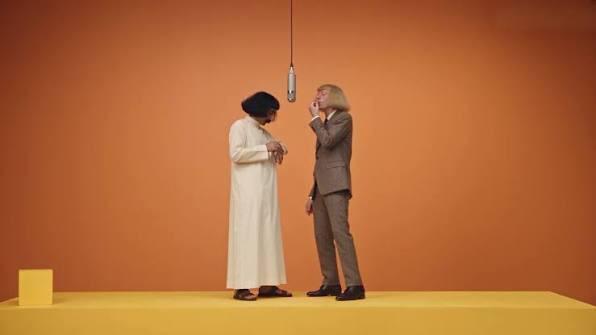

AI-generated characters are quickly becoming commercially valuable brands.
Characters such as Jean Phil and Abu Shalab have attracted large audiences in the UAE and wider region, generating viral videos, recognisable personalities and increasingly valuable commercial identities.
But their popularity creates an important legal question:
Who actually owns an AI-generated character?
Is it the person who conceived and prompted the character?
The company that operates the AI model?
The person who edits and develops the content?
Or, if the character was substantially generated by artificial intelligence, is copyright ownership itself uncertain?
Under current UAE law, there is no simple answer.
The existing copyright framework was designed around human authorship. Generative AI has introduced a new category of creative output that does not always fit neatly within traditional legal concepts.
For creators and brands, that means relying on one form of intellectual property protection may not be enough.
Is an AI-Generated Character Protected by Copyright?
This is the starting point.
Copyright law generally protects original creative works produced by an author.
That concept becomes more complicated where the image, video or character has been generated substantially by artificial intelligence.
If a user provides a short prompt and the AI system independently determines:
- the character’s appearance;
- facial features;
- clothing;
- composition;
- lighting;
- movement;
- voice;
- and overall creative expression,
it becomes difficult to identify which parts of the final output were actually created by the human user.
That matters because copyright protection traditionally depends on human creative contribution.
The UAE does not currently have a specific statutory rule stating that a purely AI-generated character automatically qualifies for copyright protection or identifying who would own such copyright.
That creates genuine uncertainty.
Human Creative Input Could Make a Difference
Not every AI-assisted creation is the same.
There is a significant difference between entering a simple instruction such as:
“Create a funny Emirati-style character”
and spending substantial time developing:
- the character concept;
- appearance;
- personality;
- clothing;
- voice;
- recurring expressions;
- scripts;
- mannerisms;
- narrative;
- visual style;
- and individual scenes.
A creator may also generate hundreds of versions before selecting particular outputs, editing them manually, combining different elements and developing the character consistently over time.
The greater the human creative contribution, the stronger the argument that at least some elements of the resulting work are protected.
The difficulty is determining where human authorship ends and machine generation begins.
That question has not yet been clearly resolved in the UAE.
The Character and the Video Are Not Necessarily the Same Legal Work
One of the most important distinctions is between the underlying character and the individual content featuring that character.
A viral AI persona may involve several separate layers of intellectual property.
The character concept
The broad idea of a humorous fictional personality may be difficult to monopolise.
Copyright generally protects expression rather than abstract ideas.
The visual appearance
A sufficiently distinctive appearance may attract stronger protection where meaningful human creative input can be demonstrated.
Scripts and dialogue
Scripts written by a human creator may independently qualify for copyright protection.
Individual videos
Editing, sequencing, music, captions, narration, graphics and other human-created elements can potentially be protected even where some underlying imagery was AI-generated.
The character name
This may be more suited to trademark protection than copyright.
Catchphrases and branding
Distinctive branding elements may create separate trademark or commercial rights.
A creator should therefore avoid thinking of an AI character as a single piece of intellectual property.
It may instead be a portfolio of different rights.
Does Writing the Prompt Mean You Own the Character?
Not necessarily.
Prompting is one of the most interesting areas of the debate.
A detailed prompt can itself involve significant creativity.
For example, a creator might specify:
- appearance;
- personality;
- cultural references;
- mannerisms;
- expressions;
- camera style;
- setting;
- tone;
- dialogue;
- colour palette;
- and continuity across scenes.
The written prompt itself may be protectable as original text if it meets the necessary requirements.
But that does not automatically mean the person owns every element of the AI-generated output.
The prompt and the output are legally different things.
A person could potentially own copyright in the wording of a detailed prompt while the legal status of the resulting image remains uncertain.
Does the AI Company Own the Output?
Again, not automatically.
The answer depends partly on the contractual terms governing the particular AI platform.
Some providers grant or assign rights in generated outputs to users.
Others may reserve broader rights or licences.
Creators should therefore review the platform terms before building a commercial character around an AI system.
But there is another important distinction.
A contract can allocate rights between the user and the AI company, but it cannot necessarily create copyright protection where copyright law does not recognise the work in the first place.
In other words:
Contractual ownership and copyright ownership are not always the same thing.
A platform may tell users that they can commercially use an output.
That does not automatically mean the output benefits from full statutory copyright protection against copying by third parties.
Can Another Brand Copy a Viral AI Character?
This is where the issue becomes commercially important.
Suppose another company sees a successful AI character and creates something almost identical.
Could the original creator stop them?
The answer may depend on exactly what has been copied.
If the second creator merely adopts the broad idea of a humorous AI-generated personality, copyright protection may be difficult.
If they copy:
- the same name;
- distinctive visual characteristics;
- scripts;
- videos;
- logos;
- catchphrases;
- storylines;
- or other human-created elements,
the legal position becomes much stronger.
Even where copyright in the underlying AI-generated character is uncertain, other legal rights may still apply.
Trademark Law May Be the Stronger Protection
For commercially successful AI characters, trademark registration may become particularly important.
A character name such as Jean Phil or Abu Shalab can operate as more than a fictional identity.
It can become a brand.
If used in connection with:
- entertainment;
- advertising;
- merchandise;
- social media;
- clothing;
- digital content;
- sponsorships;
- or commercial collaborations,
the name, logo or other identifying features may potentially be registered as trademarks in the relevant classes.
Trademark protection addresses a different question from copyright.
Copyright asks:
Who created the work?
Trademark law asks:
Does this sign identify the commercial source of particular goods or services?
For viral AI characters, that second question may ultimately become more important.
What About the Character’s Face or Appearance?
The visual identity of a recurring character may also have commercial significance.
A character that appears consistently across hundreds of videos may develop a highly recognisable look.
But protecting that appearance can be more difficult than protecting a registered name or logo.
The creator may need to rely on a combination of:
- copyright in human-created visual elements;
- trademark rights where applicable;
- registered designs in suitable cases;
- contractual restrictions;
- and unfair competition principles.
This is why creators should think about protection early, rather than waiting until copying occurs.
Passing Off and Consumer Confusion Could Matter
Even where copyright protection is uncertain, deliberately imitating a commercially established character can create other legal risks.
Suppose another business creates a nearly identical character, uses a confusingly similar name and begins selling products or advertising services in a way that suggests an association with the original creator.
The dispute may then concern more than copyright.
Potential issues could include:
- trademark infringement;
- unfair competition;
- misleading commercial practices;
- consumer confusion;
- and misrepresentation of commercial association.
This becomes particularly relevant once the character has developed significant goodwill.
The more recognisable the character becomes, the more valuable that goodwill may be.
Brands Should Not Assume Viral Characters Are Free to Use
Businesses may be tempted to use trending AI characters in advertising because they appear to be internet memes or computer-generated creations.
That can be risky.
Before using an existing AI character commercially, a brand should consider:
- who operates the account;
- whether the name is trademarked;
- whether individual videos contain protected scripts or editing;
- whether music or other third-party content is involved;
- whether the creator has granted permission;
- and whether the proposed use could imply endorsement or affiliation.
The fact that a character was originally produced using AI does not mean everything associated with it is free for commercial reuse.
Creators Should Document Their Human Contribution
Until UAE law provides clearer rules around AI authorship, documentation becomes especially important.
Creators developing valuable AI characters should consider retaining:
- original prompts;
- prompt iterations;
- design notes;
- scripts;
- sketches;
- edited files;
- rejected versions;
- production records;
- dates of publication;
- and evidence showing how the character evolved.
This can help demonstrate the extent of human creative contribution.
A creator who can show months of deliberate character development may be in a stronger position than someone relying solely on a single generated image.
Ownership Agreements Are Essential Where Several People Are Involved
Many AI characters are not created by one person.
A production may involve:
- a creative director;
- prompt engineer;
- writer;
- video editor;
- voice performer;
- designer;
- social media manager;
- agency;
- or external AI specialist.
Without written agreements, ownership can become unclear.
The business should establish who owns:
- the character;
- scripts;
- videos;
- account;
- name;
- logos;
- prompts;
- source files;
- and commercialisation rights.
This becomes particularly important once sponsorships and licensing opportunities begin.
Licensing Could Become a Major Commercial Opportunity
Successful AI characters may eventually be licensed in the same way as traditional entertainment properties.
A character could potentially appear in:
- advertisements;
- branded collaborations;
- merchandise;
- events;
- games;
- digital products;
- or television and online campaigns.
That means ownership needs to be clear before licensing begins.
A brand paying for the right to use an AI character will want certainty that the licensor actually controls the relevant rights.
If ownership of the character is uncertain, the commercial value of the licence may also be uncertain.
The UAE Legal Framework Will Need to Evolve
The broader issue is that generative AI is creating commercially valuable content faster than legal frameworks are adapting.
Traditional copyright law asks who the human author is.
Generative AI can produce work where human and machine contribution are intertwined.
That creates questions around:
- authorship;
- originality;
- ownership;
- infringement;
- licensing;
- and enforcement.
UAE courts and legislators will eventually need to determine how existing intellectual property principles apply to these new forms of creation.
Until then, creators should avoid relying exclusively on copyright.
How Should Creators Protect an AI Character Now?
A layered strategy is likely to be the safest approach.
Creators should consider:
- documenting human creative input;
- keeping records of character development;
- registering the character name and logo as trademarks where appropriate;
- protecting scripts and other human-created works;
- securing written IP assignments from agencies and contractors;
- reviewing the AI platform’s terms;
- registering relevant domain names and social media handles;
- controlling licensing through written agreements;
- and monitoring for confusing commercial imitation.
The goal is to build protection around the character even where the legal status of the AI-generated core remains uncertain.
Conclusion
Viral AI characters such as Jean Phil and Abu Shalab demonstrate how quickly generative AI can create commercially valuable fictional personalities.
But commercial success does not automatically answer the ownership question.
Under current UAE law, there is still uncertainty around whether purely AI-generated creative output attracts copyright protection and, if so, how authorship should be determined.
At the same time, creators may have stronger rights in the surrounding human-created content, branding, trademarks, scripts and commercial goodwill.
The key lesson is therefore:
Generating an AI character does not automatically mean owning every legal right in that character.
For creators and brands, the safest strategy is to treat AI characters as a bundle of intellectual property rights and protect each layer separately before the character becomes commercially valuable.
Al Kabban & Associates
For businesses seeking guidance, Al Kabban & Associates, with over 30 years of experience in UAE law and recognition by Legal 500, stands ready to help corporations build resilience against legal risks while ensuring compliance with local and international standards. For more information or to schedule a consultation, contact us at +971 4 453 9090 or visit www.alkabban.com. You can also follow us on social media for more updates on everything law related in the UAE: @Alkabban_Law
ALSO READ –
UAE Introduces New Sodium, Sugar and Fat Limits for Packaged Foods: What Businesses Need to Know
Pakistan Introduces Tax Rules for Overseas Content Creators: What UAE-Based Influencers Need to Know