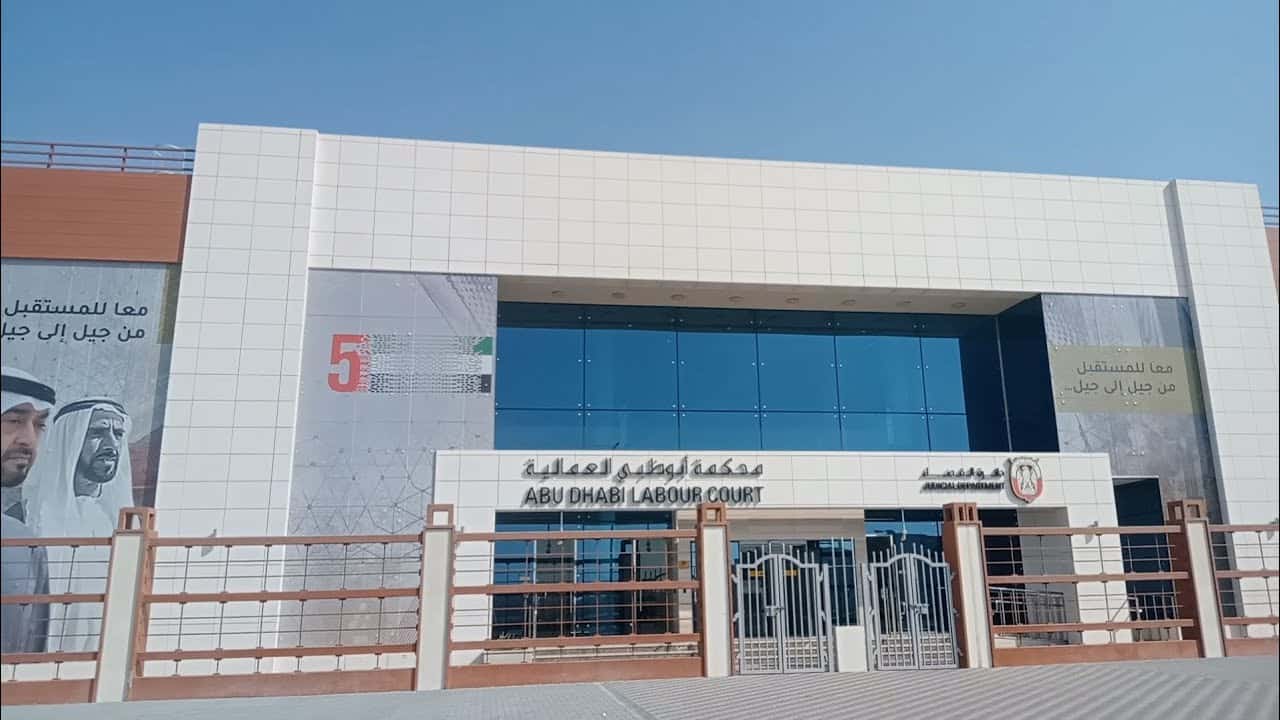

The Abu Dhabi Labour Court has recovered more than AED 7.8 million for 948 workers through the resolution of three collective labour disputes within a three-month period.
The cases involved total claims of approximately AED 12.3 million, with payments secured through a combination of judicial deposits, direct payments and amicable settlements.
Of the workers involved, 457 received their entitlements in full, while 491 received partial payments, with the remaining balances scheduled through instalment arrangements.
Significantly, the settlements also enabled the affected workers to remain in their jobs.
The outcome highlights an important feature of labour dispute resolution in the UAE:
Protecting employee entitlements and preserving business continuity do not always have to be competing objectives.
What Happened in the Three Cases?
The Abu Dhabi Labour Court dealt with three collective labour cases involving 948 workers.
Together, the claims were valued at around AED 12.3 million.
Through the court process and settlement arrangements, AED 7,811,933 was recovered for the workers.
Payments were made through:
- judicial deposits;
- direct payments by the employers;
- amicable settlements; and
- instalment arrangements for outstanding balances.
The fact that more than half of the workers still had some amounts scheduled for later payment is important.
The AED 7.8 million figure represents the amount recovered at that stage, rather than the entirety of the original claims.
What Is a Collective Labour Dispute?
A collective labour dispute can arise where the same or similar employment issue affects a substantial number of workers.
Rather than dealing with hundreds of completely separate disputes, the underlying issues may be addressed in a coordinated way.
Common causes can include:
- unpaid salaries;
- delayed wages;
- unpaid allowances;
- end-of-service entitlements;
- leave payments;
- contractual benefits; and
- other outstanding employment dues.
Where the same employer and underlying problem affect a large workforce, the financial and operational consequences can become significant very quickly.
This is why early intervention can be critical.
Settlement Does Not Mean Employees Must Leave
One of the most notable features of the Abu Dhabi cases is that the settlements allowed workers to remain employed.
Labour disputes are sometimes viewed as inherently adversarial, with the assumption that a claim will eventually result in termination or resignation.
That does not always have to happen.
Where the underlying issue is financial rather than a complete breakdown in the employment relationship, a structured settlement may allow both sides to resolve the dispute while preserving ongoing employment.
For workers, this can mean recovering unpaid entitlements without losing their income source.
For employers, it can mean retaining experienced staff while managing repayment obligations in a commercially workable way.
Why Instalment Plans Can Matter
An employer facing a large collective claim may not always be able to pay the full amount immediately.
That does not necessarily mean the workers must abandon their claims.
Structured instalment arrangements can offer a practical alternative where properly agreed and monitored.
Such arrangements may help:
- provide workers with a defined payment schedule;
- reduce uncertainty;
- avoid further escalation;
- allow businesses to manage cash flow;
- preserve jobs;
- and create a framework for satisfying outstanding liabilities over time.
However, an instalment plan does not mean the unpaid entitlement disappears.
The outstanding balance remains due according to the terms of the agreed settlement or payment schedule.
The Importance of Judicial Deposits and Direct Payments
The use of judicial deposits is also significant.
Where funds are deposited through the judicial system, there is a formal record of payment and a clearer mechanism for distributing amounts to entitled workers.
Direct payments may also form part of a settlement where the amounts and recipients are properly documented.
In large workforce disputes, transparency and record-keeping become especially important.
Employers should be able to demonstrate:
- what was paid;
- to whom;
- when it was paid;
- what amount remains outstanding; and
- whether the employee accepted the agreed settlement structure.
Poor documentation can create further disputes even after the underlying issue appears to have been resolved.
Collective Claims Can Create Significant Business Exposure
The Abu Dhabi cases also illustrate how quickly individual employment liabilities can become substantial when multiplied across a workforce.
A delayed salary or unpaid allowance affecting one employee may appear manageable.
The same issue affecting hundreds of employees can create exposure running into millions of dirhams.
That can also create broader consequences, including:
- employee dissatisfaction;
- resignations;
- operational disruption;
- regulatory scrutiny;
- court proceedings;
- enforcement action; and
- reputational damage.
Employers should therefore treat recurring payroll or entitlement issues as potential collective risks rather than isolated HR problems.
Early Settlement Can Be Commercially Sensible
Litigation is not always the only route to resolving a labour dispute.
Where liability is reasonably clear, early settlement can often be more efficient than prolonged proceedings.
A practical settlement may allow the parties to agree:
- the amount owed;
- the timing of payments;
- whether instalments are necessary;
- how existing employment will continue;
- and how future entitlements will be handled.
That can reduce legal costs and uncertainty for both sides.
The key is that any settlement should be clear, properly documented and capable of being implemented.
Employers Should Act Before Claims Become Collective
The best time to address a workforce payment issue is before hundreds of employees need to pursue claims.
Employers should maintain effective systems for:
- payroll monitoring;
- wage payment;
- leave accrual;
- end-of-service calculations;
- allowances;
- contractual benefits; and
- employee complaints.
Where a temporary cash-flow problem affects salary or benefits, early communication and legal advice may help avoid escalation.
Ignoring the issue can increase both the amount owed and the complexity of resolving it.
Workers Should Keep Records of Their Entitlements
For employees, documentation remains equally important.
Workers pursuing financial claims should retain records such as:
- employment contracts;
- salary statements;
- bank records;
- wage payment records;
- leave balances;
- termination documents;
- correspondence with the employer; and
- any settlement proposals.
Where hundreds of employees are affected by a similar issue, consistent records can help establish the nature and scale of the claims.
What the Abu Dhabi Cases Demonstrate
The most useful lesson from these cases is not simply that AED 7.8 million was recovered.
It is that a large collective dispute was resolved through several mechanisms working together.
The outcome involved:
- court supervision;
- recovery of significant sums;
- negotiated settlements;
- structured payment plans;
- and continued employment.
That combination is important because labour disputes often involve both legal and commercial realities.
Workers need to receive what they are owed.
Businesses may also need a realistic mechanism to satisfy those liabilities without collapsing operations.
A structured resolution can sometimes achieve both.
Conclusion
The recovery of AED 7.8 million for 948 workers by the Abu Dhabi Labour Court demonstrates the scale that collective labour disputes can reach and the range of tools available to resolve them.
Some workers received their full entitlements immediately, while others received partial payments with the remaining balances structured through instalments.
Importantly, the settlements also allowed the workers to remain employed.
The broader lesson is clear:
Effective labour dispute resolution does not always require choosing between enforcing employee rights and preserving business continuity. With proper settlement structures, both objectives can sometimes be achieved together.
Al Kabban & Associates
For businesses seeking guidance, Al Kabban & Associates, with over 30 years of experience in UAE law and recognition by Legal 500, stands ready to help corporations build resilience against legal risks while ensuring compliance with local and international standards. For more information or to schedule a consultation, contact us at +971 4 453 9090 or visit www.alkabban.com. You can also follow us on social media for more updates on everything law related in the UAE: @Alkabban_Law
ALSO READ –
When a Wedding Is Called Off, Who Keeps the Gifts? Abu Dhabi Court Orders AED 60,000 Repayment