
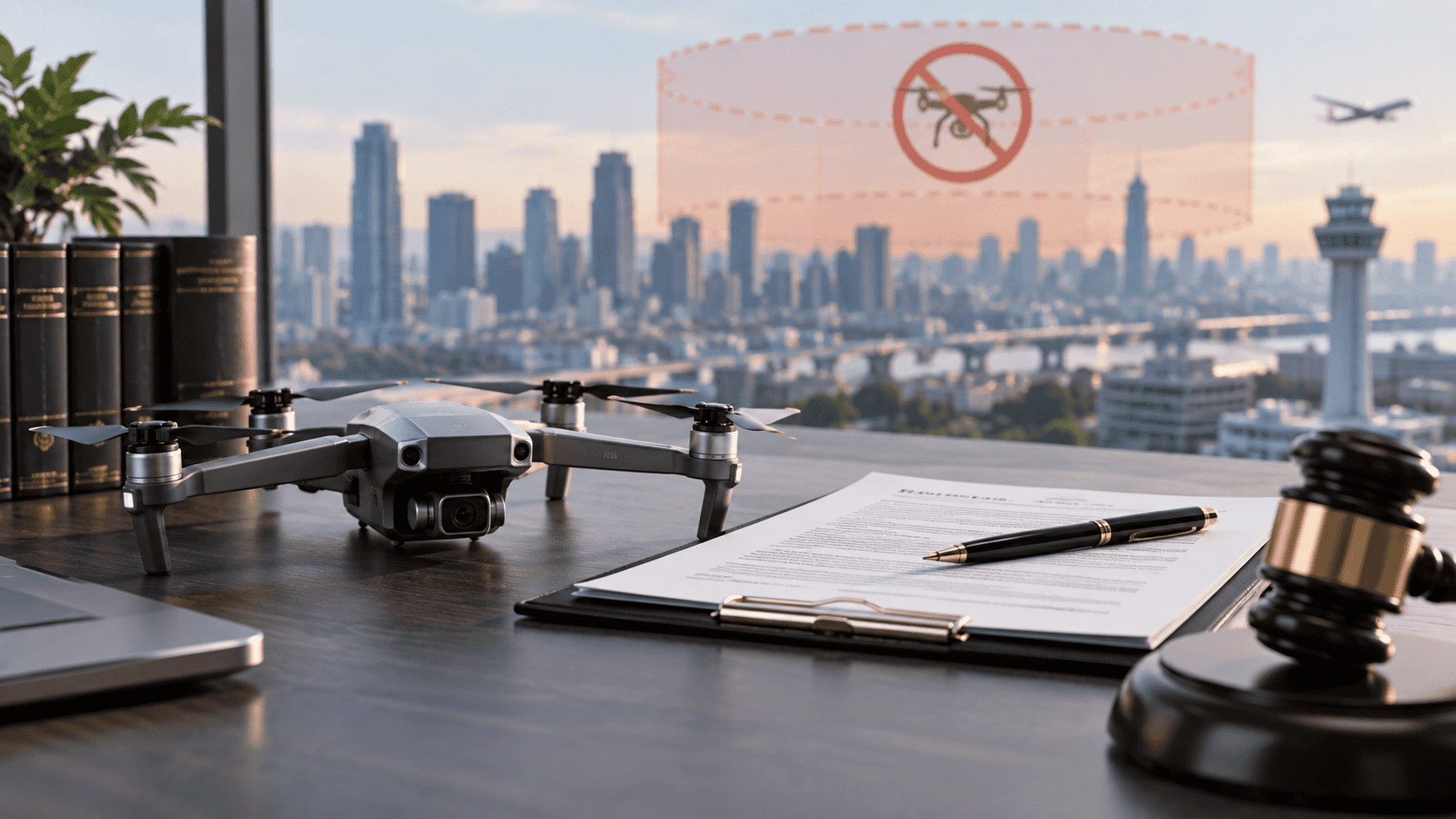

The use of drones and unmanned aircraft has expanded rapidly across commercial, industrial, and recreational sectors in the United Arab Emirates, prompting the development of a detailed regulatory framework to manage safety, security, and accountability. Within the scope of Aviation Law, drone and unmanned aircraft regulations define how these technologies may be owned, registered, operated, and controlled, ensuring that innovation progresses without compromising public safety or national interests. For businesses, operators, and technology providers, compliance with these rules is essential to lawful and sustainable operations.
Regulatory Objectives for Unmanned Aircraft
Drone regulation in the UAE is designed to address the unique risks posed by unmanned aircraft, including collision hazards, privacy concerns, airspace interference, and security threats. Unlike traditional aviation, unmanned operations often take place at low altitudes and in urban environments, increasing the need for precise operational controls.
The regulatory approach balances innovation with risk management, enabling the use of drones for legitimate commercial and public purposes while maintaining strict oversight to protect people, property, and critical infrastructure.
Scope of Drone and Unmanned Aircraft Regulation
Definition of Unmanned Aircraft
Unmanned aircraft are defined broadly to include remotely piloted aircraft systems, autonomous drones, and associated control stations. Regulation applies regardless of whether the operation is commercial, governmental, or recreational, with specific requirements scaled according to risk and operational complexity.
This inclusive definition ensures that emerging technologies remain subject to regulatory oversight as capabilities evolve.
Distinction Between Recreational and Commercial Use
Regulatory obligations differ significantly depending on whether a drone is used for recreational purposes or commercial activities. Commercial operations are subject to enhanced approval, training, and oversight requirements, reflecting the increased operational risk and potential third-party exposure.
Operators must accurately classify their activities, as mischaracterization can result in enforcement action and suspension of operating privileges.
Registration and Identification Requirements
Mandatory Registration
Most drones operating in the UAE must be registered prior to use. Registration links the aircraft to a responsible operator or owner, enabling regulatory tracking and accountability. Registration requirements typically include disclosure of technical specifications and operator details.
Operating an unregistered drone where registration is required constitutes a regulatory violation with potential administrative and criminal consequences.
Remote Identification and Traceability
Regulators increasingly require drones to carry remote identification capabilities that allow authorities to identify and locate unmanned aircraft during flight. These measures enhance airspace awareness and support enforcement against unauthorized or unsafe operations.
Operator Licensing and Competency
Training and Certification
Commercial drone operators must meet defined competency standards, including completion of approved training programs and successful assessment of theoretical and practical knowledge. Training addresses airspace rules, operational limitations, emergency procedures, and privacy considerations.
Licensing ensures that operators possess the skills and judgment necessary to manage unmanned aircraft safely in complex environments.
Operational Responsibility
Licensed operators bear legal responsibility for the conduct of drone operations, including compliance with flight restrictions and adherence to approved operating procedures. Delegation of control does not absolve the licensed operator of accountability.
Operational Restrictions and Airspace Management
Designated Airspace and No-Fly Zones
Drone operations are subject to strict airspace restrictions. Certain areas, including airports, military installations, government facilities, and densely populated zones, are designated as no-fly areas or require special authorization.
Unauthorized operations in restricted airspace present serious safety and security risks and are treated as significant regulatory breaches.
Altitude, Distance, and Line-of-Sight Rules
Operational rules typically limit maximum altitude, require maintenance of visual line of sight, and impose minimum separation distances from people, buildings, and other aircraft. These constraints reduce collision risk and protect third parties.
Advanced operations beyond these limits may be permitted only with specific regulatory approval and additional risk mitigation measures.
Commercial Drone Operations
Permits and Operational Approvals
Commercial drone activities, such as aerial photography, surveying, inspections, and deliveries, require formal permits. Authorities assess proposed operations based on risk, location, aircraft capability, and operator experience.
Permits may impose operational conditions, including time restrictions, safety buffers, and coordination with other authorities.
Insurance and Liability
Commercial operators are generally required to maintain adequate insurance coverage to address third-party liability arising from drone operations. Insurance obligations reflect the potential for property damage, personal injury, and privacy claims.
Operating without required insurance exposes operators to significant financial and legal risk.
Privacy, Data Protection, and Surveillance Concerns
Drones equipped with cameras and sensors raise important privacy and data protection issues. Operators must ensure that data collection complies with applicable privacy laws and does not infringe on the rights of individuals.
Unauthorized surveillance or misuse of collected data can result in civil liability and regulatory sanctions, particularly where sensitive locations or personal data are involved.
Enforcement and Penalties
Regulatory authorities are empowered to enforce drone regulations through inspections, monitoring, fines, confiscation of equipment, and suspension or revocation of operating privileges. Serious violations may result in criminal prosecution, particularly where safety or national security is compromised.
Enforcement actions are intended not only to penalize misconduct but to deter unsafe practices and promote a culture of compliance.
Accidents, Incidents, and Investigations
Drone-related accidents and incidents are subject to investigation where safety risks, injuries, or property damage occur. Operators are required to report certain occurrences and cooperate with investigative authorities.
Findings from investigations may lead to corrective measures, enforcement action, or changes to regulatory requirements.
Integration with Manned Aviation
A key regulatory challenge is the safe integration of unmanned aircraft into airspace shared with manned aviation. Rules governing coordination, detect-and-avoid capabilities, and communication are central to preventing conflicts.
As unmanned traffic management systems evolve, regulatory frameworks continue to adapt to accommodate increased drone activity while preserving aviation safety.
Commercial and Legal Risk Considerations
For businesses deploying drones, regulatory non-compliance can disrupt operations, invalidate insurance coverage, and expose organizations to liability and reputational harm. Contracts with clients, service providers, and insurers increasingly require demonstrable compliance with drone regulations.
From a legal standpoint, proactive risk assessment, documented procedures, and ongoing regulatory engagement are essential to sustainable drone operations.
Conclusion
Drone and unmanned aircraft regulations in the UAE establish a comprehensive legal framework that enables innovation while safeguarding safety, security, and public trust. By regulating registration, operator competency, airspace access, and liability, the UAE supports responsible growth in unmanned aviation activities. For operators and businesses, understanding and complying with these regulations is essential to unlocking the benefits of drone technology while operating confidently within a highly regulated aviation environment.


